
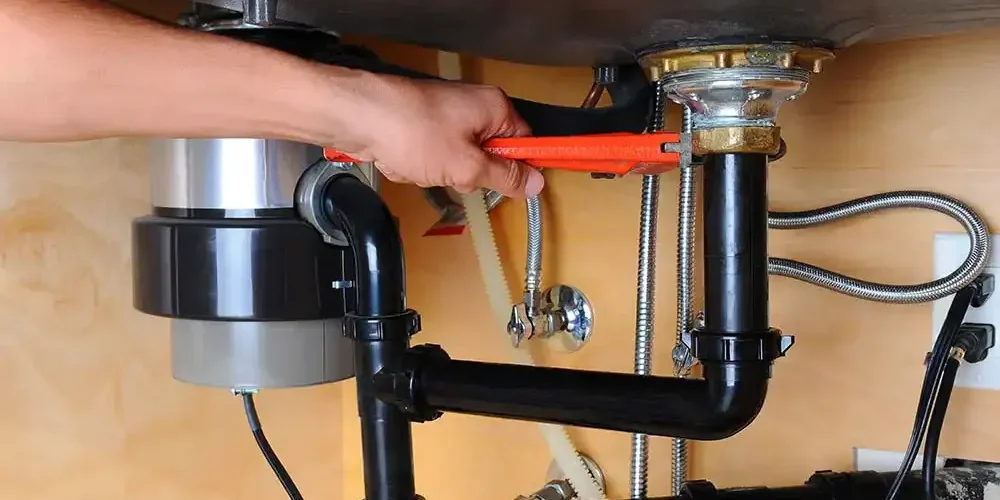
When a garbage disposal hums without spinning, most homeowners do the same thing: press the reset button, hope for the best, and call a plumber when nothing changes. The reset button is not the wrong move. Pressing it before addressing the actual problem is.
A humming disposal is not a dead one. The motor has power and is trying to run. What it cannot do is move. That distinction matters more than most people realize, because it changes what the fix actually is and what order the steps need to happen in.
Understanding that sequence is the difference between a disposal that starts working again in five minutes and one that keeps humming no matter how many times you press reset. This guide covers exactly that process, in the right order, so you are not guessing.
Why a Humming Disposal Is Different From a Dead One
When a disposal makes no sound at all, the problem is usually upstream. A tripped breaker, a blown fuse, or a wiring issue can stop power before it reaches the unit. In those situations, pressing the reset button will not change anything because the disposal is not receiving electricity in the first place.
A humming disposal tells a different story. The motor is receiving power and attempting to turn, but something inside the unit is preventing the grinding plate from moving.
That distinction matters because it changes what should be checked next.
What Is Actually Causing the Hum
The humming noise is the motor trying to turn the grinding plate, but something inside the disposal is preventing it from moving. In most cases, that resistance comes from one of three situations.
1. Food Jammed in the Grinding Plate
The most common cause is food waste packed tightly around the grinding plate, also called the impeller. Fibrous foods such as celery, artichoke leaves, and corn husks are frequent culprits. Buildup from grinding small amounts of food repeatedly without enough running water can create the same problem over time.
When the impeller cannot move freely, the motor continues trying to rotate it, which produces the humming sound.
2. A Foreign Object Trapped Inside
A bottle cap, small utensil, piece of glass, or other hard object that falls into the disposal can wedge between the impeller and the grinding ring. When that happens, the grinding plate locks in place.
The motor continues attempting to turn against that resistance. The humming sound you hear is the motor straining until the disposal’s thermal overload protection shuts the unit down to prevent damage.
3. Motor Capacitor Strain
In older garbage disposals, the capacitor that helps the motor start under load can weaken over time. When that happens, the motor may not generate enough torque to begin rotating the grinding plate.
The result is the same humming sound without movement, even when no visible jam is present. In this situation, clearing the disposal and pressing reset may not solve the problem because the issue lies inside the motor assembly.
Before You Hit Reset, Check This First
Pressing reset does not remove whatever stopped the grinding plate from turning. If the obstruction remains inside the disposal, the motor will simply hum again when power returns.
1. Power Safety First
Before putting your hand anywhere near the disposal, switch the unit off and confirm it is not running. Do not rely on the wall switch alone if you plan to reach into the opening. Turning off the circuit breaker for the disposal is the safer step.
2. Clear the Jam
Most garbage disposals include a hex wrench slot at the base of the unit beneath the sink. Inserting a quarter-inch hex wrench into that slot and working it back and forth manually rotates the grinding plate and frees the obstruction.
If the wrench slot is not accessible, some units can also be freed using a wooden broom handle inserted from above to move the plate gently. Never reach in with your hand to move the impeller directly.
3. Basic Inspection
Once the grinding plate moves freely, shine a flashlight into the opening and check for any foreign objects still sitting inside the chamber. Tongs or needle-nose pliers can remove it safely.
Even with the power off, avoid reaching inside the disposal with your fingers.
How to Reset Your Garbage Disposal Step by Step
The reset button protects the disposal motor from burning out. When the grinding plate cannot turn, the motor overheats and the overload switch trips, cutting power to the unit.
Step 1: Turn Off the Power
Switch the disposal off at the wall. If the unit has been humming for more than a few seconds, give it two to three minutes to cool down before pressing reset.
A motor that is still hot can trip the overload switch again immediately.
Step 2: Locate the Reset Button
The reset button is a small red or black button on the underside of the disposal unit beneath the sink. When the overload switch trips, the button usually pops outward slightly.
Step 3: Press Reset
Press the button firmly until you feel it click into place. If it will not stay pressed or springs back out, the motor may still be hot, or the obstruction may not be fully cleared.
If that happens, allow the unit to cool and rotate the grinding plate again with the hex wrench before trying to reset a second time.
Step 4: Test the Disposal
Turn on the cold water first, then switch the disposal on. Running cold water helps flush debris through the system and keeps the motor cooler during the test.
If the disposal runs normally, the reset process worked. If the unit hums again or the reset trips immediately, the issue likely goes beyond a simple jam.
When the Reset Does Not Work
When the reset process fails to restore normal operation, the issue usually lies deeper inside the disposal. At that point, the humming sound is no longer just a temporary obstruction.
1. Burned Out Motor
If the disposal was left running while jammed for an extended period, the motor windings can overheat to the point of failure. A burned motor may still produce a humming sound but will not respond to reset, regardless of how many times it is pressed.
A noticeable burning smell near the unit is often a sign that the motor has been damaged.
2. Seized Grinding Plate
In some cases, the grinding plate itself may bend, warp, or seize on its shaft from the force of the jam or from corrosion in older units. When this happens, the plate cannot rotate even after the original obstruction is removed.
If the hex wrench cannot free the plate from below the unit, the internal mechanism may be locked in place.
3. Replacement Scenario
Garbage disposals typically last eight to twelve years under normal use. A unit that continues humming after the jam has been cleared and the reset has been pressed is often reaching the end of its functional lifespan.
At that point, repair may not be the most practical option. A plumber can evaluate whether the motor or internal components can be serviced or whether replacing the unit makes more sense given its age and condition.
If the disposal continues to hum after the obstruction is cleared and the reset process is complete, the problem has moved beyond what the reset button was designed to handle.
That is usually the point where a plumber should take a closer look.
When It Is Time to Call a Plumber
A humming disposal that will not turn after the jam is cleared and the reset is pressed usually points to an internal mechanical problem beyond what the reset button can address.
At that stage, the question is whether the unit can be repaired or if replacement is the more practical option.
A plumber who handles garbage disposals can confirm whether the obstruction has been fully cleared, whether the motor has sustained damage, and whether plumbing repair or a new unit makes the most sense.
Hardy Plumbing handles garbage disposal repair and kitchen plumbing services. If the reset did not hold, contact us to have the unit assessed before the problem becomes more complicated.
Services
Emergency Plumbing?
Contact the plumber or plumbing company to schedule a service call. Be prepared to provide help about the problem.
